Phone chargers heating up is a very common issue, especially in India where many people use low-cost or fast chargers for long hours. While slight warmth is normal, excessive heat can be dangerous for both your phone and your safety.
In this post, we’ll explain why phone chargers heat up, whether it’s dangerous, and how to choose a safe charger in India.
Table of Contents
🔥 Why Phone Charger Heats Up (Common Reasons)
1. Cheap or Low-Quality Chargers
Low-cost chargers often use poor internal components and lack proper heat regulation. These chargers convert electricity inefficiently, which causes overheating.
👉 Very common with local, unbranded chargers.
2. Damaged or Low-Quality Charging Cable
A broken, bent, or thin cable increases resistance, causing:
- Slow charging
- Excess heat generation
Even if your adapter is good, a bad cable can make it heat up.
3. Fast Charging Technology
Fast chargers deliver higher power (18W, 33W, 65W+).
This naturally generates more heat, especially if:
- Phone doesn’t support that wattage
- Charger isn’t certified
4. Overcharging or Long Charging Hours
Keeping the phone plugged in overnight or for many hours causes:
- Continuous power flow
- Heat buildup in charger & battery
Modern phones reduce charging speed after 80%, but cheap chargers don’t handle this well.
5. High Room Temperature
In hot Indian weather, chargers heat up faster, especially:
- Without ventilation
- On beds, pillows, or wooden surfaces
⚠️ Is It Dangerous If Phone Charger Heats Up?
Mild warmth = Normal
Very hot to touch = Dangerous
Excessive heat can lead to:
- Charger damage
- Battery degradation
- Fire hazards (rare but possible)
🚫 Stop using a charger immediately if:
- It smells like burning
- Plastic starts melting
- Charger becomes extremely hot within minutes
✅ How to Choose a Safe Phone Charger in India
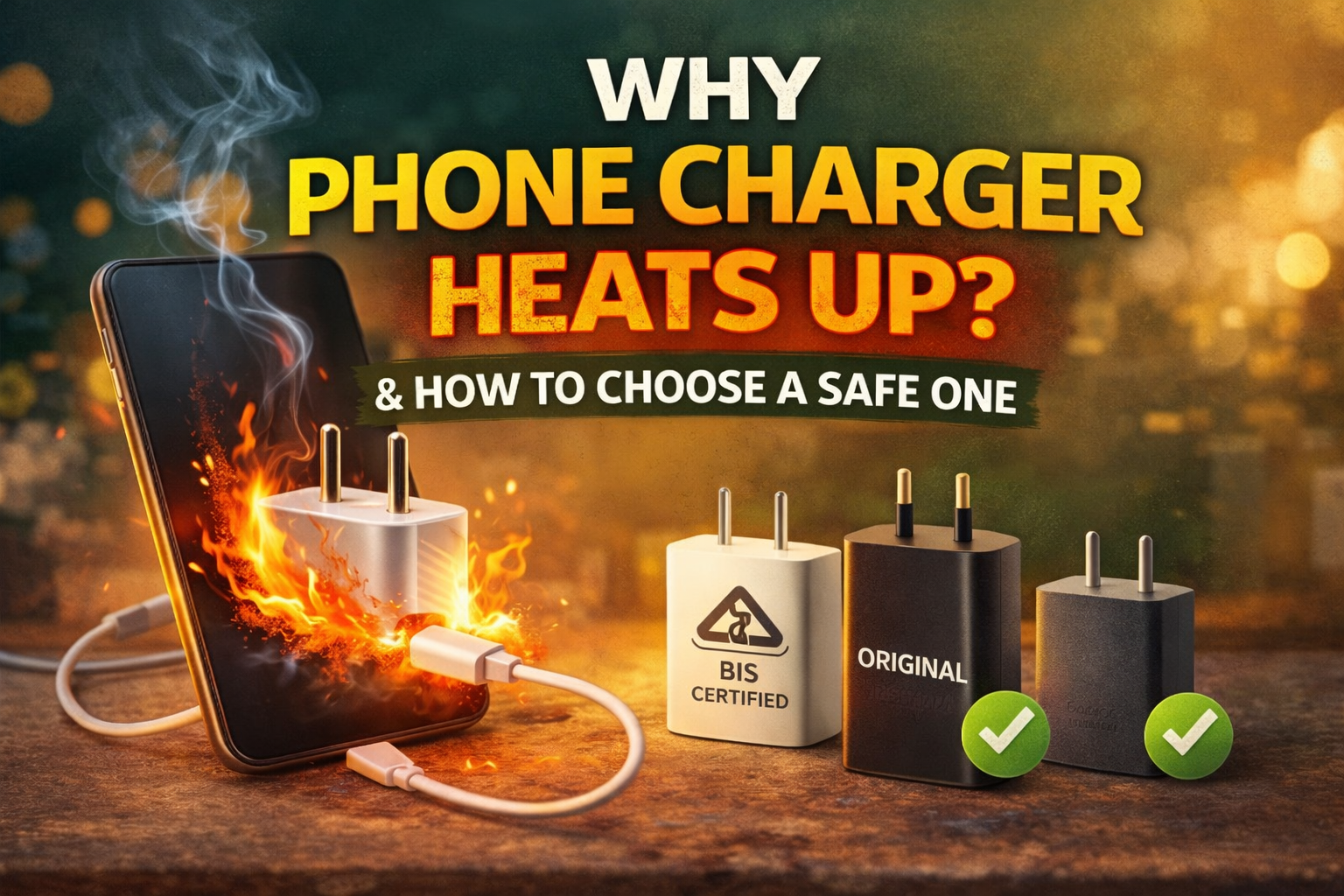
1. Buy Certified Chargers Only
Look for:
- BIS certification (India standard)
- Original brand chargers (Samsung, Xiaomi, Apple, etc.)
Avoid roadside or fake chargers.
2. Match Charger Wattage With Your Phone
Don’t use very high-watt chargers if your phone supports only basic charging.
Example:
- Phone supports 18W → Use 18W or 20W charger
- Avoid random 65W chargers unless phone supports it
3. Choose Chargers With Built-in Protection
Safe chargers come with:
- Overheat protection
- Over-voltage protection
- Short-circuit protection
These features reduce heating risk.
4. Use Good Quality Charging Cable
Always use:
- Original cable
- Thick, durable cables
- Fast charging–compatible cables
A bad cable = heat + slow charging.
5. Avoid Charging on Soft Surfaces
Charge your phone:
- On a table
- On a hard surface
- In open air
Avoid beds, sofas, or under pillows.
🔌 Recommended Safe Charger Types
- Original brand chargers (phone manufacturer)
- Certified fast chargers (18W–33W) for daily use
- GaN chargers (produce less heat, more efficient)
- Chargers with BIS + safety certifications

❓ FAQs – People Also Ask (SEO Boost)
Why does my phone charger heat up while charging?
Because electricity conversion creates heat, especially with fast charging, poor cables, or low-quality chargers.
Is it normal for fast chargers to heat up?
Yes, slight heating is normal, but it should not become extremely hot.
Can charger heating damage my phone?
Yes. Continuous overheating can damage the battery and reduce phone lifespan.
Should I stop using a charger if it heats up?
If it becomes too hot to touch, stop using it immediately and replace it.
Which charger is safest in India?
BIS-certified, branded chargers with built-in safety protections are safest.
🏁 Final Thoughts
Understanding why phone charger heats up helps you avoid unsafe chargers and protect your phone. Spending a little more on a safe, certified charger is always better than risking device damage or safety issues.
Disclaimer: This article is for informational purposes only. Always follow manufacturer guidelines and use certified charging accessories.