Five years ago, ordering vegetables online felt risky.
Today in 2026, it feels completely normal.
From metro cities to Tier-2 towns, online grocery shopping in India has moved from “emergency option” to everyday habit. What started as a pandemic-driven shift has now become a permanent lifestyle change.
But what exactly is fueling this explosion?
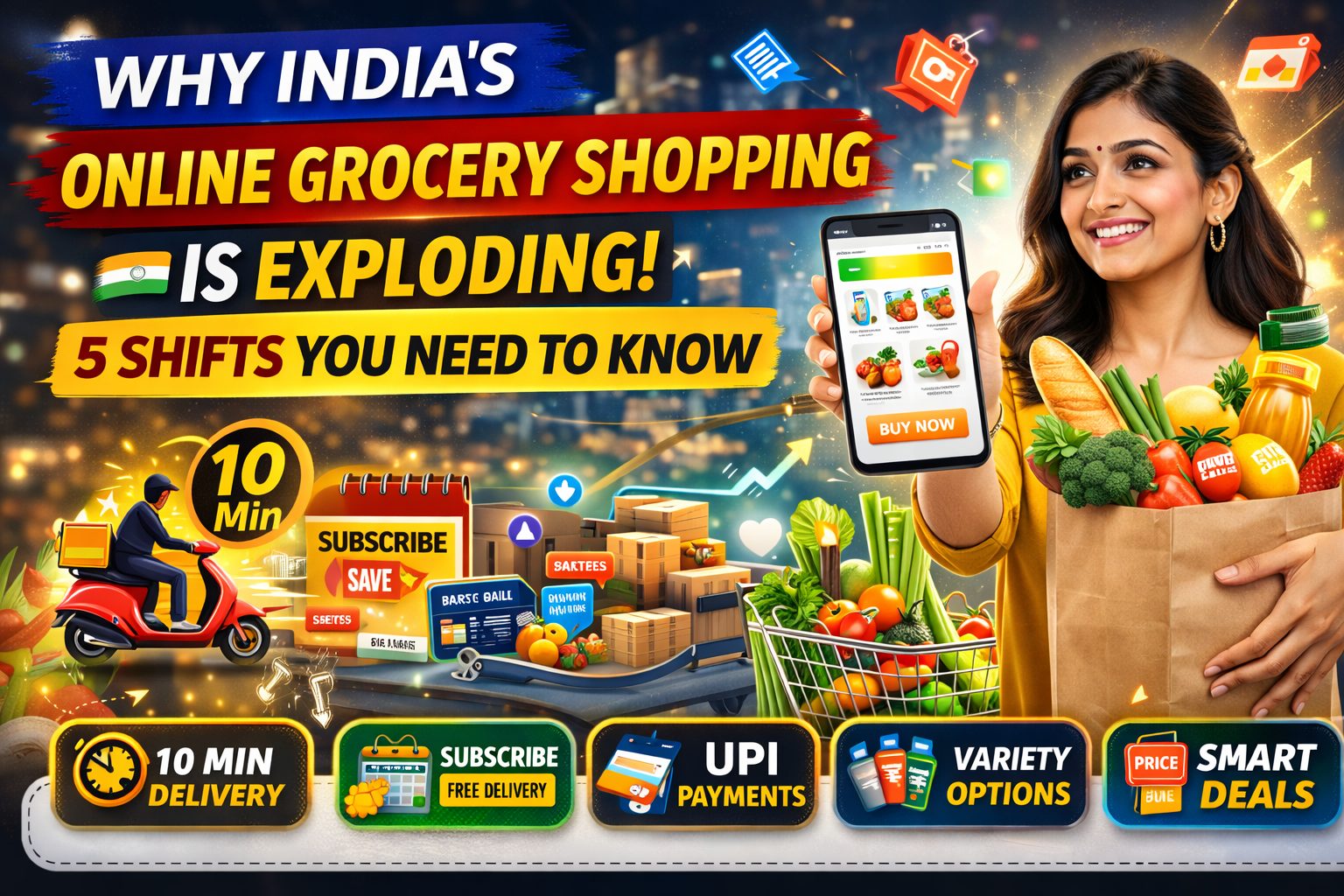
Let’s break down the 5 major shifts transforming India’s grocery shopping habits — and what they mean for shoppers.
Table of Contents
📈 The Online Grocery Boom: What’s Happening?
India’s digital adoption, UPI growth, smartphone penetration, and faster delivery networks have created the perfect storm for grocery ecommerce growth.
Today’s consumer wants:
- ⏱ Convenience
- 🚚 Faster delivery
- 💳 Seamless payments
- 💰 Competitive pricing
- 📱 Easy reordering
And online grocery platforms are delivering exactly that.
🔥 5 Major Shifts Driving the Growth
1️⃣ Speed Is Now the Biggest Selling Point
Earlier: 2–3 day delivery was acceptable.
Now: 10–30 minutes is expected.
Quick-commerce platforms have completely changed buyer expectations.
People now order:
- Milk at 8 PM
- Vegetables during cooking
- Snacks mid-movie
The shift is clear: Grocery is now “on-demand,” not planned.
This speed factor has made online grocery shopping feel more reliable than local stores in many areas.
2️⃣ Subscription & Auto-Replenishment Are Growing
Consumers no longer want to remember to buy:
- Cooking oil
- Rice & flour
- Pet food
- Diapers
- Cleaning supplies
Many platforms now offer:
✔ Scheduled deliveries
✔ Subscription discounts
✔ Monthly essentials bundles
Busy working professionals and nuclear families are adopting this fast.
Convenience is winning over habit.

3️⃣ UPI & Digital Payments Built Trust
One major barrier earlier was payment hesitation.
But with UPI dominance, digital wallets, and instant refunds, customers feel secure.
Benefits shoppers love:
- Instant cashback
- Bank offers
- Easy refund tracking
- No need for cash
Digital payment growth has directly boosted grocery ecommerce confidence.
4️⃣ Wider Product Variety Than Local Stores
Online grocery platforms now offer:
- Organic vegetables
- Imported snacks
- Gluten-free products
- Vegan alternatives
- Regional specialty foods
Local kirana stores simply cannot match this range.
Shoppers now browse, compare brands, read reviews, and choose smarter — all from their phones.
The shift: Choice-driven buying instead of availability-driven buying.
5️⃣ Price Transparency & Smart Discounts
Online platforms allow buyers to:
- Compare brands instantly
- Check price per gram
- Use coupons
- Stack bank offers
- Track price drops
Shoppers feel more in control.
Unlike physical stores, where pricing varies, online grocery gives clarity.
And let’s be honest — Indians love value.
🛒 Who Is Driving This Growth?
👩💼 Working Professionals
Less time, more income — convenience matters most.
👨👩👧 Nuclear Families
Planned monthly shopping + emergency quick orders.
👵 Senior Citizens
Easy doorstep delivery without travel.
🏘 Tier-2 & Tier-3 Cities
Rapid smartphone adoption expanding the market beyond metros.
Online grocery is no longer “urban only.”
❗ Challenges Still Exist
While growth is massive, some concerns remain:
- Quality consistency of fresh produce
- Delivery delays during peak sales
- Packaging waste concerns
- Overdependence on discount-driven buying
But improvements are happening rapidly.
📊 What This Means for Shoppers
Here’s how consumers are adapting:
✔ Planning monthly essentials online
✔ Using quick commerce for emergencies
✔ Comparing prices before every order
✔ Using subscriptions for regular products
✔ Watching for cashback & bank deals
The modern grocery shopper is strategic, not impulsive.
🔮 What’s Next for Online Grocery in India?
Experts predict:
- AI-based smart shopping lists
- Voice-based grocery ordering
- Hyperlocal warehouse expansion
- Faster rural penetration
- More eco-friendly packaging
Online grocery isn’t just growing — it’s becoming smarter.
💡 Final Thoughts
India’s online grocery explosion isn’t a temporary trend.
It’s a behavioral shift.
Consumers now value:
- Speed
- Convenience
- Transparency
- Variety
- Digital ease
The traditional weekly market visit is evolving into a digital-first habit.
And in 2026, grocery shopping is no longer about where you buy — it’s about how fast and smartly you buy.